News Article
End-User perspectives support the development of bio-based leather alternatives
What factors influence the acceptance of new leather alternatives?
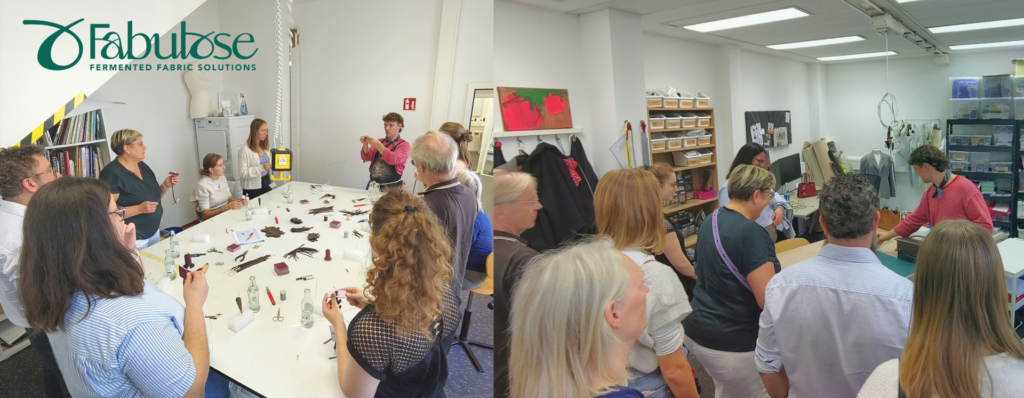
On 19 September 2026, 14 participants joined the first Fabulose co-creation workshop at project partner Melina Bucher’s atelier in Mannheim. The workshop explored how consumers perceive conventional and alternative leather materials and which characteristics they consider relevant when evaluating future bio-based options.
Bringing different perspectives to the table
Fabulose is developing vegan, bio-based and circular leather alternatives from bacterial nanocellulose, cyanophycin and bacterial pigments. As part of this process, the project also investigates end-user expectations and perceptions to better understand potential requirements for market uptake.
The workshop brought together students, designers, creative professionals, sustainability-minded consumers and conventional leather users. Participants discussed their experiences with conventional leather and existing alternatives, including perceptions related to functionality, aesthetics, durability and environmental impacts.
What shapes perceptions of leather products?
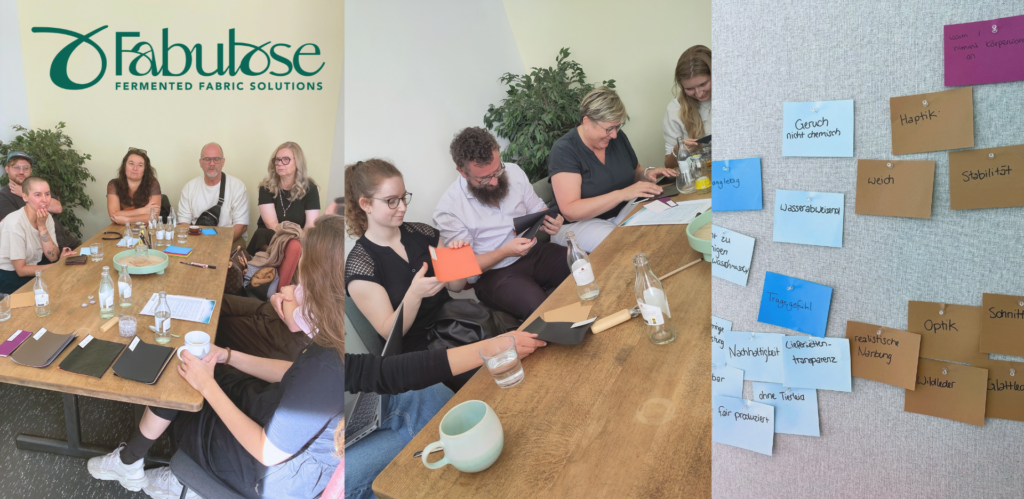
Following an introduction to the project, participants shared personal leather and leather-like items such as bags, shoes, wallets and jackets. These objects served as starting points for discussions about product use, longevity and personal preferences.
Durability, appearance, comfort, texture and feel were frequently mentioned as factors influencing product value. Longevity emerged as a central expectation. Participants valued conventional leather’s ability to soften, adapt and develop a distinctive patina. Experiences with some artificial or vegan products had been less convincing when surfaces cracked, lost their appearance or proved difficult to repair.
Feeling, seeing and testing the alternatives
Participants then examined a range of leather alternatives, including fossil-based vegan materials and bio-based options. Discussions focused on characteristics such as texture, flexibility, robustness, appearance and smell. Natural-looking textures, matte surfaces and visible grain structures were generally perceived positively, while questions were raised regarding abrasion resistance, colour transfer and long-term performance. Participants also noted that requirements may vary depending on the intended application. While some materials appeared suitable for bags, wallets and accessories, products such as footwear were associated with additional expectations regarding flexibility, comfort, breathability and durability.
Transparency changes how materials are perceived
The workshop showed that information about material origin and production processes can influence how materials are perceived. Participants expressed interest in innovative feedstocks, recycled resources and bio-based production approaches. The discussions suggested that material performance and transparent communication are both relevant factors when forming opinions about novel materials.
Turning material evaluation into a hands-on experience
During a practical session, participants created handbag charms using one of Melina Bucher’s leather alternatives. This activity allowed them to directly experience material properties such as thickness, flexibility and surface characteristics. A tour of prototypes, machinery and trials connected the discussion to handbag–making craft and the history of the Melina Bucher atelier.
What the workshop means for Fabulose
The insights gathered in Mannheim will contribute to the ongoing development activities within Fabulose and support future communication and market-oriented activities. Discussions highlighted aspects such as durability, comfort, repairability, recyclability, environmental considerations and tactile qualities as relevant topics when evaluating leather alternatives.
The workshop provided valuable feedback on consumer perspectives and demonstrated the importance of incorporating end-user views into the development of new bio-based materials.
The Fabulose project would like to thank all the participants for their contributions.