News Article
Partner Spotlight:
Unlocking the Potential of Bacterial Cellulose with SUMATRIX Biotech
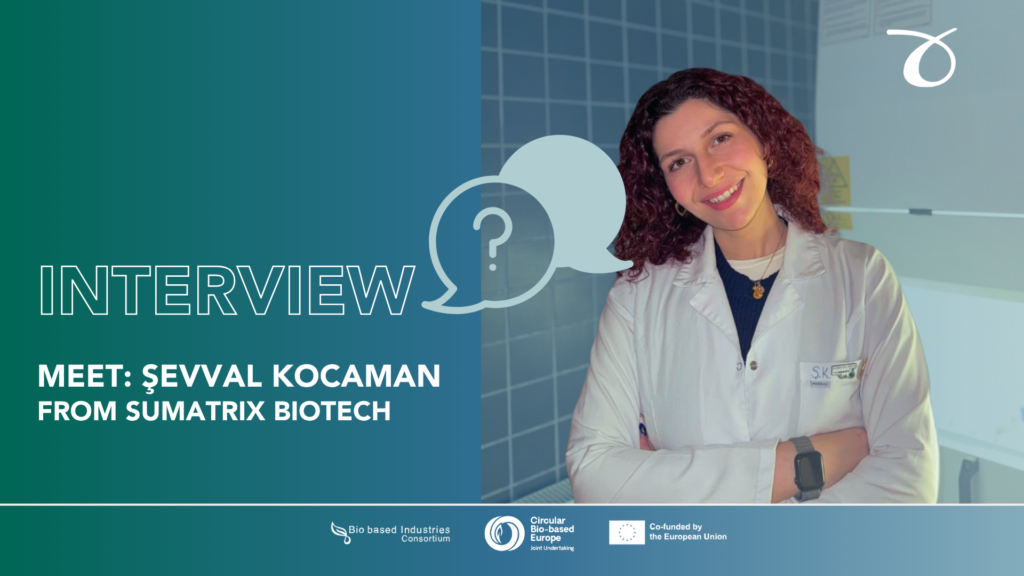
Şevval Kocaman is a PhD candidate and working at SUMATRIX Biotech, a deep tech biotechnology company and Marmara University spin-off based in Istanbul. The company develops next generation biomaterials and bioactive ingredients using AI-controlled microbial fermentation processes and biofabrication. The company’s technology platform combines bacterial cellulose, fermentation-derived extracts and extracellular vesicles (EVs) to create sustainable, high-performance solutions for cosmetics, personal care, healthcare, food, textile and advanced materials industries. As part of the Fabulose Project, Sumatrix is working to advance the production of bacterial nanocellulose for use in textile applications, enabling fiber spinning and textile backing.
Today, Fabulose is putting the spotlight on this young, innovative start-up by interviewing Şevval Kocaman, bioengineer at Sumatrix and colleague in Fabulose.
Question, Fabulose:
In SUMATRIX you are wokring with materials such as bacterial cellulose, fermentation-derived extracts, and extracellular vesicles, alongside AI technology. What sparked your interest in these materials? Can you explain for the general public: what is so special about these materials, and why are they promising for sustainable textiles and other industries?
Answer, Şevval Kocaman:
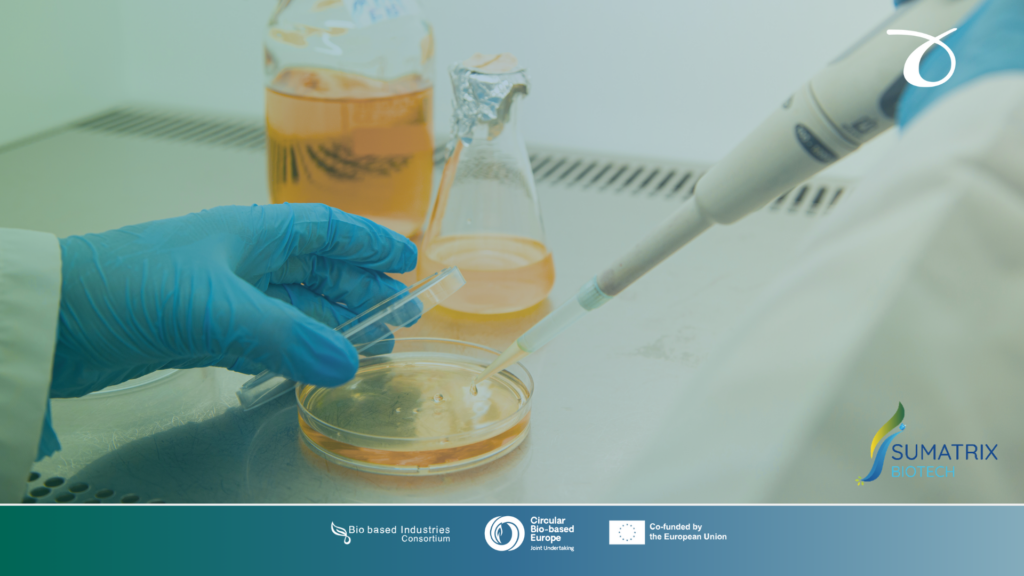
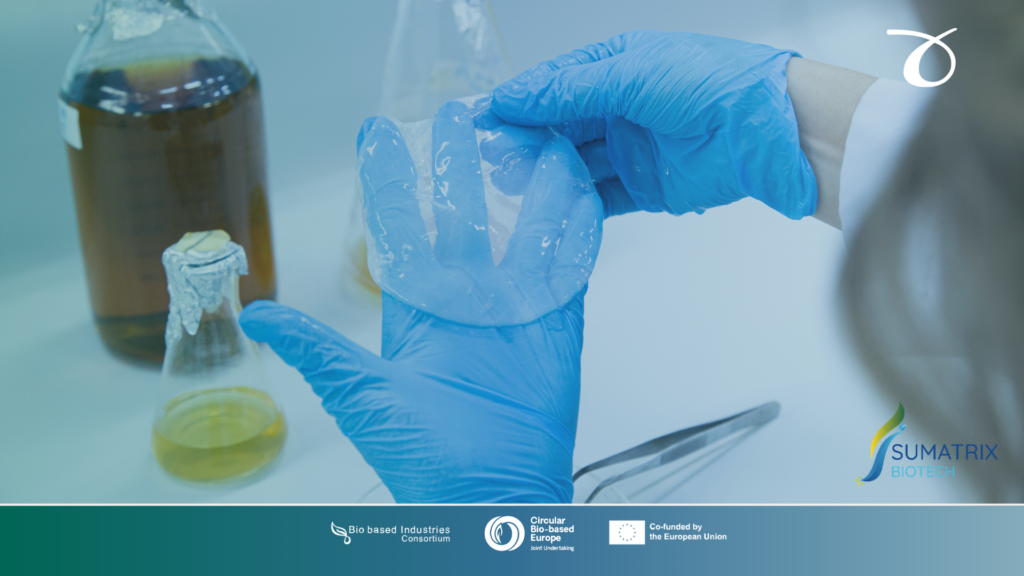
What first drew me to these materials was the idea that microorganisms can produce something with real material value. I often explain bacterial nanocellulose with a fish-tank analogy. You can think of the bacteria as the fish. We provide them with the right environment and feed them with nutrients such as sugars that can come from sources like beets. As they grow, they produce a very thin, gel-like film on the surface of the liquid.
This thin film is bacterial nanocellulose. It may look very simple at first, but it is actually made of an extremely fine network of cellulose fibres. This network gives the material interesting properties such as flexibility, strength and a very large surface area. What I find fascinating is that we can influence these properties by changing the fermentation conditions, such as the bacterial strain, the nutrients, temperature, oxygen and production time.
For me, this is where microbiology meets material science. We start with a living system, but the aim is very practical: to understand and guide the process well enough to create a material that can be used in real applications.
Fermentation-derived extracts and extracellular vesicles are also exciting because they show that fermentation can provide more than one output. Beyond producing a physical material, microorganisms can produce components with functional and bioactive potential. This gives us the opportunity to develop materials and ingredients that are not only bio-based, but can also offer specific functions depending on the application.
For sustainable textiles, bacterial nanocellulose is promising because it is produced through fermentation and has a naturally fine fibre structure. Rather than treating the material as something fixed, we can work with the production process itself to tailor it for different needs. The challenge is to turn this wet biological network into a stable, processable material that can be integrated into textile systems. That is exactly what makes this work so interesting to me: we are learning how a material grown by bacteria can become part of future everyday products.
Q:
Within Fabulose, SUMATRIX is focusing on bacterial nanocellulose for fiber spinning and textile backing. What are the biggest technical challenges you are tackling, and what would success look like by the end of the project?
A:
Within Fabulose, my work at Sumatrix focuses on fermentation optimization, bacterial nanocellulose production, characterization and scale-up. Our goal is not only to produce bacterial nanocellulose, but to produce it in a form that can be processed into fibres and used as a textile backing.
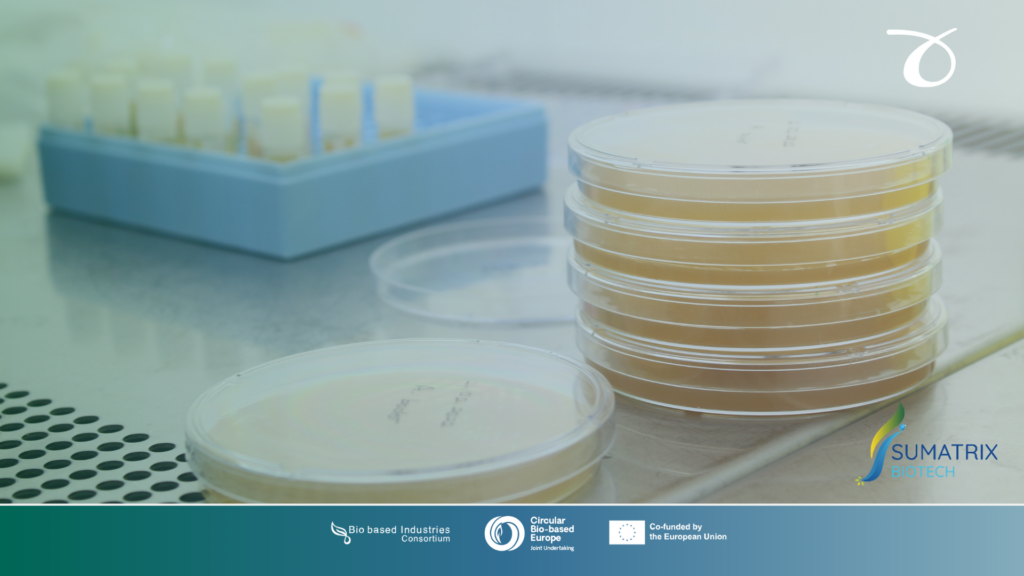
One of the biggest challenges is that we work with living microorganisms. For the process to work properly, we need to provide the right infrastructure and control the production environment carefully. Cross-contamination is always an important risk, especially when we move from bench scale to larger volumes. A small issue in the system can affect the entire fermentation and, as a result, the quality of the material.
In biotechnology, scale-up is never simply a case of “two plus two equals four”. A process that works well in a small flask or a bench-scale bioreactor does not automatically behave in the same way at a larger scale. Oxygen transfer, mixing, temperature distribution and even microbial behaviour can change significantly. For this reason, we need to understand the process deeply rather than simply repeat the same laboratory recipe at a larger volume.
At Sumatrix, within the Fabulose project, we are working towards reliable pre-pilot-scale production. For me, success starts with achieving this milestone. Our next goal is to transfer this achievement towards pilot-scale production and demonstrate that the process can be stable, repeatable and relevant for industrial applications. It is important that we do not only produce an interesting material in the lab, but develop a process that can truly move closer to real-world use.
At the same time, we need to preserve the special structure of bacterial nanocellulose and process it into a form suitable for fibre spinning and textile backing. By the end of the project, I would be very happy to demonstrate a reliable route from fermentation to a textile-relevant material: producing bacterial nanocellulose at pre-pilot scale, processing it into fibres, and showing that it can be integrated into a textile backing.
Q:
Sustainability and circularity are core to Fabulose. How do you see the biomaterials used at SUMATRIX contributing to a more sustainable fashion and materials sector, and where do you hope your technology will be used first, at scale?
A:
I think bacterial nanocellulose can contribute to sustainability because it offers a different production route. It is made through fermentation, so the material is grown rather than produced through a traditional manufacturing process. This gives us the opportunity to rethink where materials come from and how they are designed. Instead of starting with a conventional raw material and trying to improve it afterwards, we can start with a biological process and guide it towards the properties we need.
At the same time, I believe we need to be realistic. A material is not sustainable only because it is bio-based. We also need to consider its production efficiency, energy and water needs, the chemicals used during processing, its durability and what happens to it after use. For me, sustainability is not a label that can be added at the end; it is something that needs to be considered throughout the entire life of a material.
This is why I value the Fabulose project. It brings together expertise from different parts of the value chain: from fermentation and material development to textile processing and end-of-life considerations.
I hope bacterial nanocellulose will first be used in applications where it can offer a real and meaningful advantage, rather than trying to replace every conventional material at once. Textile backing and leather-alternative systems are strong starting points because they allow us to demonstrate both the material’s performance and the value of biological production.
For me, the long-term vision is simple: I would like to see future materials carry a better story. Materials that are not only beautiful or functional, but also thoughtfully produced, responsibly used and considered beyond their first life.
Fabulose would like to thank Şevval Kocaman for taking the time to participate in this interview and for sharing her insights. The Fabulose consortium is delighted to have the SUMATRIX Biotech team on board for this project to develop fermented fabric solutions as an alternative to leather.