Overview & Objectives
By integrating biotechnology, circular design, and digital optimisation tools, the project delivers materials suitable for fashion, automotive, and upholstery applications, offering a sustainable replacement for both animal and synthetic leathers. The project follows a holistic approach, covering the entire value chain from material creation to market adoption.
Key objectives of the project include:
Validating efficient production processes for bacterial cellulose, cyanophycin, and bacterial pigments derived from industrial and food waste streams.
Creating a bio-based, animal-free leather-like fabric suitable for roll-to-roll manufacturing by optimizing raw materials, textile backings, and coatings, and initiating pilot-scale production.
Optimise production using a digital twin framework by defining key parameters, integrating data, and demonstrating its effectiveness.
Gathering market requirements, selecting optimal materials, and integrating them into products.
Ensuring full recyclability and biodegradability through defined recycling processes and degradation testing. To ensure these materials are sustainable throughout their lifecycle, Digital Twins will monitor, optimize, and track production processes and material performance. This will also support transparency and enable efficient recycling management, aligning the project with circular economy principles
Applying Safe-by-Design principles to align specifications, assess risks, evaluate costs, and study socio-economic and environmental impacts.
Disseminate outcomes and engage stakeholders through communication, multi-stakeholder plans, and peer learning, while preparing an operational and IP strategy.
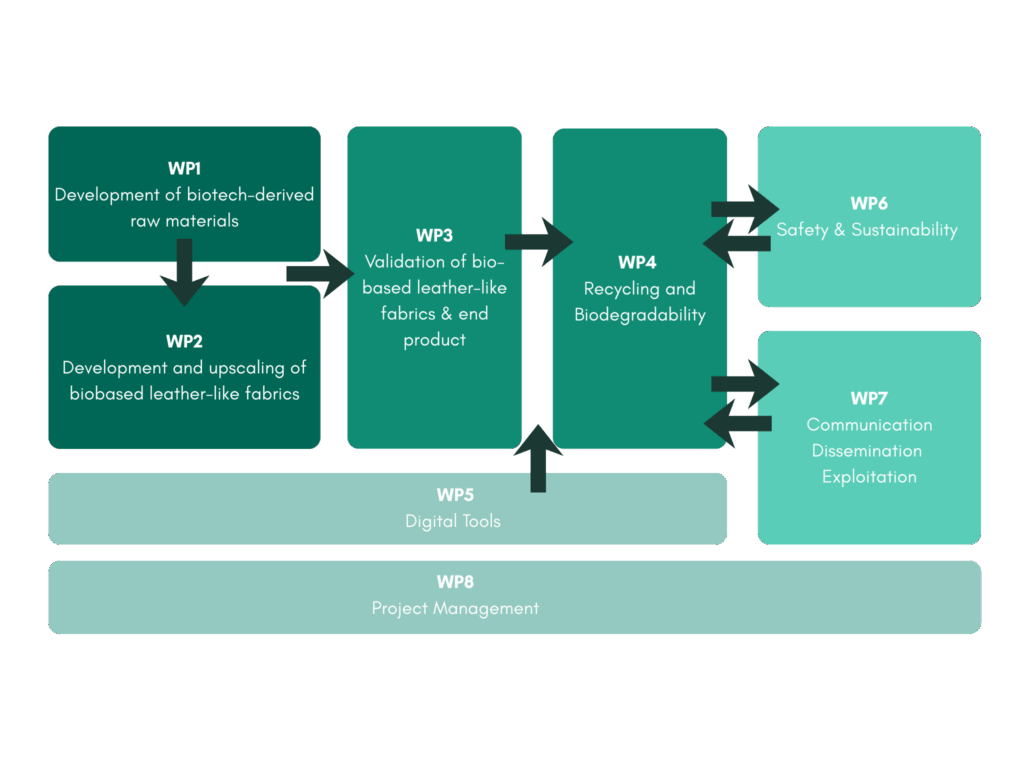
Work Packages
To meet these objectives, Fabulose is structured into eight interdependent work packages that align research, development, and exploitation efforts across the consortium.