
Background
Rethinking Leather for a Sustainable Future: Fabulose is a research and innovation project focused on developing scalable, fully bio-based leather-like fabrics. By replacing both animal-derived and plastic-based materials, the project delivers high-performance, ethical, and sustainable materials that meet modern industry standards.
Why It Matters
Conventional leather production relies on animal agriculture, contributing to deforestation, greenhouse gas emissions, and water pollution. Traditional tanning also uses toxic chemicals, posing risks to workers and the environment. While synthetic leathers avoid the use of animals, they are often made from plastics and fossil-based binders, generating persistent waste and microplastic pollution.
In contrast, bio-based vegan leather alternatives are produced from renewable resources, significantly reducing fossil fuel dependence and carbon emissions, while meeting growing consumer demand for sustainable products.
The Challenge
Despite rising demand for sustainable materials, current bio-based leather alternatives often struggle to match the durability, texture, and aesthetics of conventional leather. Materials like mycelium or bacterial cellulose require long growth periods and can be inconsistent, limiting quality and scalability. These challenges have slowed widespread market adoption.
The Fabulose Approach
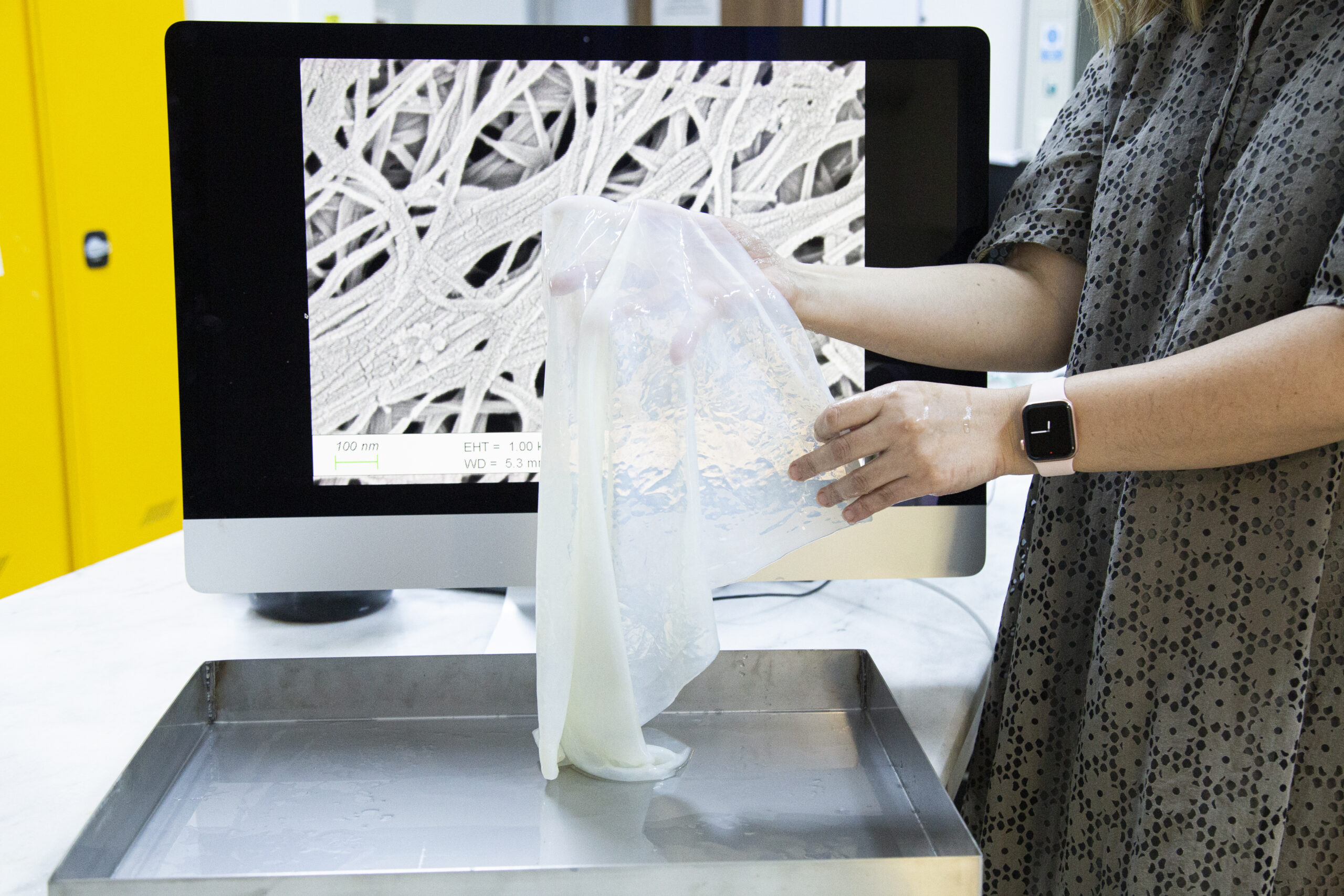
Fabulose proposes a next-generation leather-like fabric using biotechnological innovation. The project creates a multi-layered bacterial cellulose-based material, where a dyed textile substrate is coated with functional bacterial cellulose and cyanophycin layers to enhance flexibility, haptics, and resistance. This approach enables customized textures and finishes, replicating the look and feel of premium leather, without animals or plastics. Unlike traditional static liquid fermentation, which limits bacterial cellulose production speed and consistency, Fabulose introduces an advanced scalable process that enables faster growth, improved material uniformity, and adaptable sheet dimensions.